
What's happened with READING?
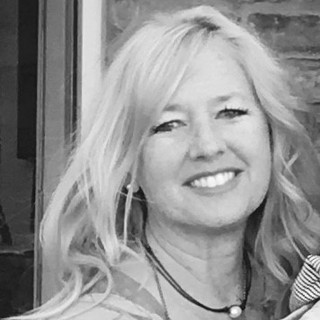
I came into education as a second career in the early 1990s. I started my graduate program at the College of William & Mary while I worked there at the Society of the Alumni in Records and later in Publications. My professors taught me how to think with intuition, that students are not just little people in seats. Rather, they are children who come to school with their own backgrounds and passions. One size education does not fit all. As a creative type, this kind of thinking aligned with how I hoped to spend a portion of my adult life...teaching children how to love thinking and learning, with love of reading as a critical foundational component.

After a move, I later finished my degree at the University of Colorado, Boulder campus. I continued to be inspired by exceptional professors. First, Phil Langer, who got me thinking about gifted education as a sub-set of special education, an understanding that would later impact many years of my career as I earned my Talented and Gifted Endorsement and worked in the gifted realm for more than a decade. Bea Ramos helped me think about inclusion differently, and others, but it was Shelby Wolf who completely turned my thoughts about reading on its head. I was suddenly able to understand myself more fully through the lens of millions of words read as a child. Her seminal work on analyzing children's literature reminded me of those early words and the pleasures they brought, the connections to places I might never visit and people I would never meet, but nonetheless, they became part of my landscape and fabric.
When I learned of her passing in 2013, I wept. I cried in gratitude for all of the ways she changed me, and how she influenced the way that I perceived and taught reading content to my students for more than 30 years! I'm still in it, and I care so much about this profession! Things are changing, and I am often asked by parents, neighbors, and friends how they can help rekindle a love of reading in their students and children. I am taking that to heart and plan to make some changes to my blog to further explore this issue of reading in America!
My jumping off point for this year comes from a post by Dr. Brad Johnson. I've excerpted the piece that most resonated with me. You can find the full article at the link.
We Keep Saying “Kids Can’t Read.”
But We Never Talk About the World They’re Reading — and Testing — In.
I learned to read in a completely different world
McGuffey Readers.
Newspapers on the table every morning.
Magazines stacked in waiting rooms.
Library books checked out and actually finished.
An encyclopedia set that mattered because it was the only answer in the house.
If I wanted to know something, I had to read for it.
No shortcuts.
No videos.
No search bar.
No notifications buzzing in my pocket.
Reading wasn’t an academic skill.
It was how you figured things out.
Fifty years ago, readers were shaped by their environment.
Life was slower.
Interruptions were rare.
Boredom existed.
Handwriting mattered.
Long sentences didn’t feel overwhelming.
You stayed with a text because there was nothing else competing for your attention.
Not because people were smarter.
But because the world quietly trained them for deep reading.
Now look at the world we gave kids.
TikTok.
Instagram.
Snapchat.
YouTube.
Facebook feeds.
Infinite scroll.
Short-form video.
Constant notifications.
Multitasking as a lifestyle.
AI answers in seconds.
Video replacing text.
Content engineered to keep attention hooked.
None of that existed when most of our reading systems were built.
None of it.
As I read Dr. Johnson's post, my mind wandered back to the girl I was in elementary school. I checked out books by the armful from both the school and local public library. I took a book (or two) with me everywhere I went. Thankfully, I am not prone to carsickness, so many pages were read during the in-between moments in life. I tucked a small flashlight under my pillow when I made the bed, so that if I just couldn't wait until the next day to finish a book, I would finish it underneath my bedspread tent during the wee hours. Ellen Tebbits was the first book I read in one sitting, because I just had to see how it ended!
In upcoming posts, I will offer recommendations for picture books for elementary students (yes, even 5th graders love a quality picture book), as well as some of my favorite adult novels.


Comments